
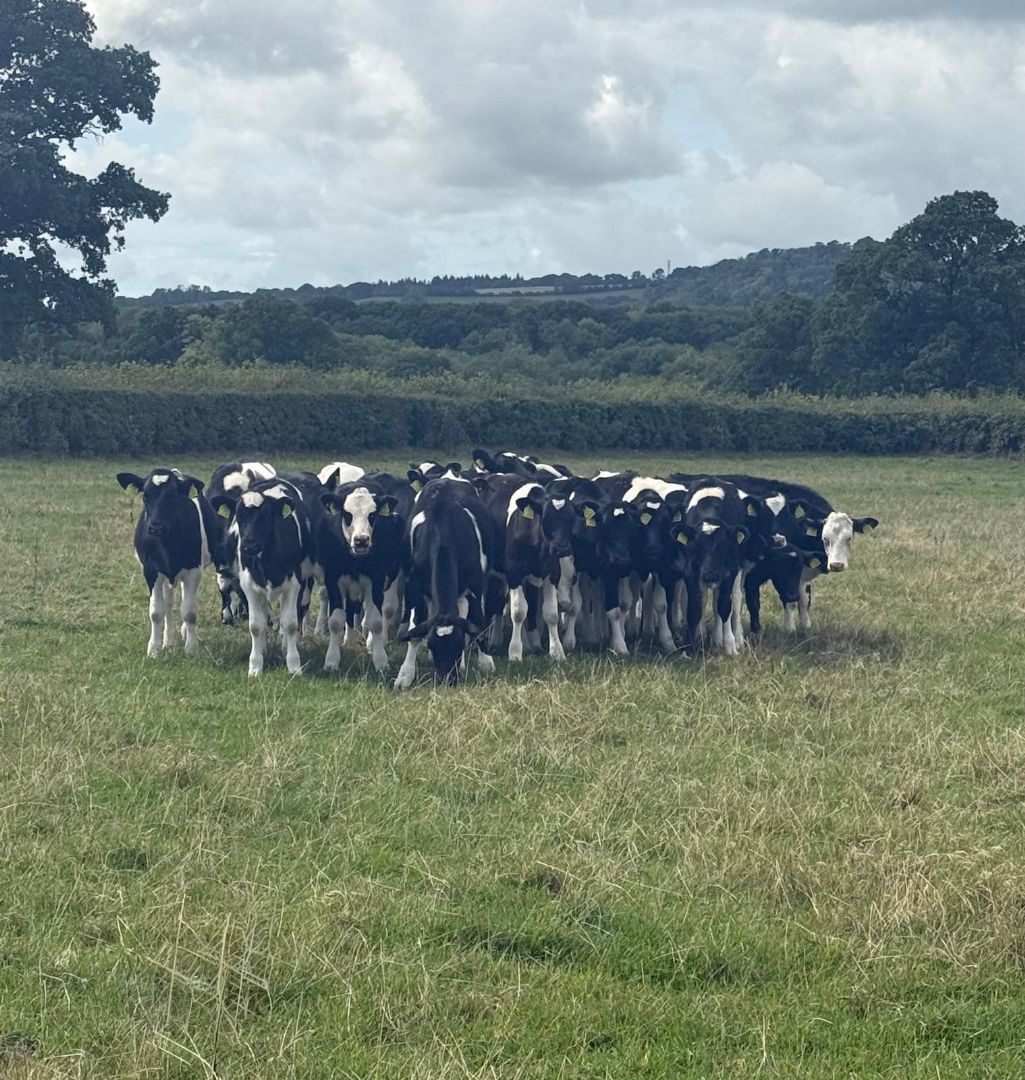
In September 2026, Heidi Gibbs represented Innovation for Agriculture at the launch of Sustainable Dairy Pathways: The Path to 2030. The report sets out how the UK dairy sector can become more resilient and sustainable while continuing to produce safe, nutritious and affordable food.
Having heard the recommendations first-hand at the launch, Heidi shares three areas she believes will be particularly important for the sector: better slurry and manure management, investment in skills, and making more of the nutritional value of milk.
The UK dairy sector produces around 15 billion litres of milk each year, providing an important source of affordable nutrition while supporting more than 50,000 on-farm jobs and a further 22,500 in dairy processing.
For Heidi, the report’s overarching message is that the route to a more resilient dairy sector is through scaling proven measures, investing in infrastructure and creating the conditions for wider adoption. Specifically, improving slurry and manure management, investing in the people and skills needed to deliver change, and better communicating the nutritional value of milk will support the sector in achieving a more productive, resilient and sustainable future.
Slurry and manure management
The largest investment requirement is expected to be in slurry and manure management systems. This includes slurry storage, covers, low-emission spreading equipment, separation technologies and related infrastructure. These measures are important because they deliver benefits across several sustainability outcomes at once, including reduced methane emissions, lower ammonia losses, improved nutrient retention and reduced risk of water pollution.
Actions can be immediate, medium term or require further planning. To support with planning of nutrient applications, farmers can use the Plan and Manage Nutrient Applications tool, which has been introduced by Defra this year.
In terms of greenhouse gas emissions, there is a need for development of advisory capacity to use carbon management tools to make optimised recommendations on a farm-by-farm basis. Projects such as Climate Smart Advisors are taking strides in equipping advisors in this area, enabling them to provide tailored guidance that will help farmers identify mitigation measures that make sense for their business.
There are also opportunities for using manure and slurry as a resource in renewable energy production, such as via anaerobic digestion. This requires significant planning, but can provide resilience by meeting farm energy needs or a diversified income from selling renewable energy.
Investment in skills
Infrastructure and technology will only deliver their potential if the people using them have the right skills. One of Heidi’s key take-homes was the need to provide development opportunities for people working in dairy, to support a more sustainable dairy sector.
This is going to require collective effort across the sector. Farmers and employers will need to invest in skills, training and good workplaces, while processors and industry bodies can support training, leadership, wellbeing and career development. Colleges, advisers and vets can also participate in building the skills needed for new technologies and practices.
Although outside the scope of the report, the GB Calf Strategy is already developing pathways to enhance skills among anyone involved in calf rearing, ensuring guidance is consistent while processes can be optimised for each farm. This will directly impact the dairy sector, as heifers will be getting the right start setting them up to perform as they enter the dairy herd.
Marketing the nutritional value of milk
Not all of the changes needed to strengthen dairy’s future will happen on farm. There is also opportunity further along the supply chain to better communicate the nutritional value of milk.
At the launch event, Heidi was impressed to learn about recent developments in nutritional science which show how the unique structure of dairy foods enhances nutrient absorption and improves health outcomes compared with isolated nutrients. This means that the nutritional value of whole dairy foods such as milk, yoghurt and cheese, may not be fully reflected when only individual nutrients are considered.
Linked to this is the emerging discipline of Nutritional Life Cycle Assessment (LCA), which is assessing foods in terms of the nutritional value they provide relative to the impact of their production on the environment. This enables more meaningful comparisons between foods than conventional LCA and more accurately reflects the true nutritional value of dairy.
If the nutritional value of dairy can be better evidenced and communicated, could this help consumers and the market recognise its true value? Shifting the dial on this could contribute to the economic sustainability of the dairy sector.
Building on the strengths in the dairy sector
Much of the actions highlighted in the Sustainable Dairy Pathways report require expanding on ongoing successes. Since 1990 greenhouse gas emissions per litre of milk have fallen by 22% while water use by dairy processors has fallen by more than 50% per kg of milk since 2008.
Also, dairy production is inherently circular. Manures are returned to the land to support grass growth, which cows upcycle, along with food industry by-products and crop residues, to produce a highly nutritious food for human consumption.
The path to 2030 will require action across the whole dairy supply chain. Farmers, processors, retailers, government, finance providers, researchers and advisers all have a role to play.
For Heidi, the message from the launch was that a more resilient dairy sector will be built by improving how resources are managed, investing in the people who deliver change and ensuring the value of dairy is properly understood. The opportunity is not simply to produce milk more sustainably, but to strengthen the businesses and communities that depend on the sector.