
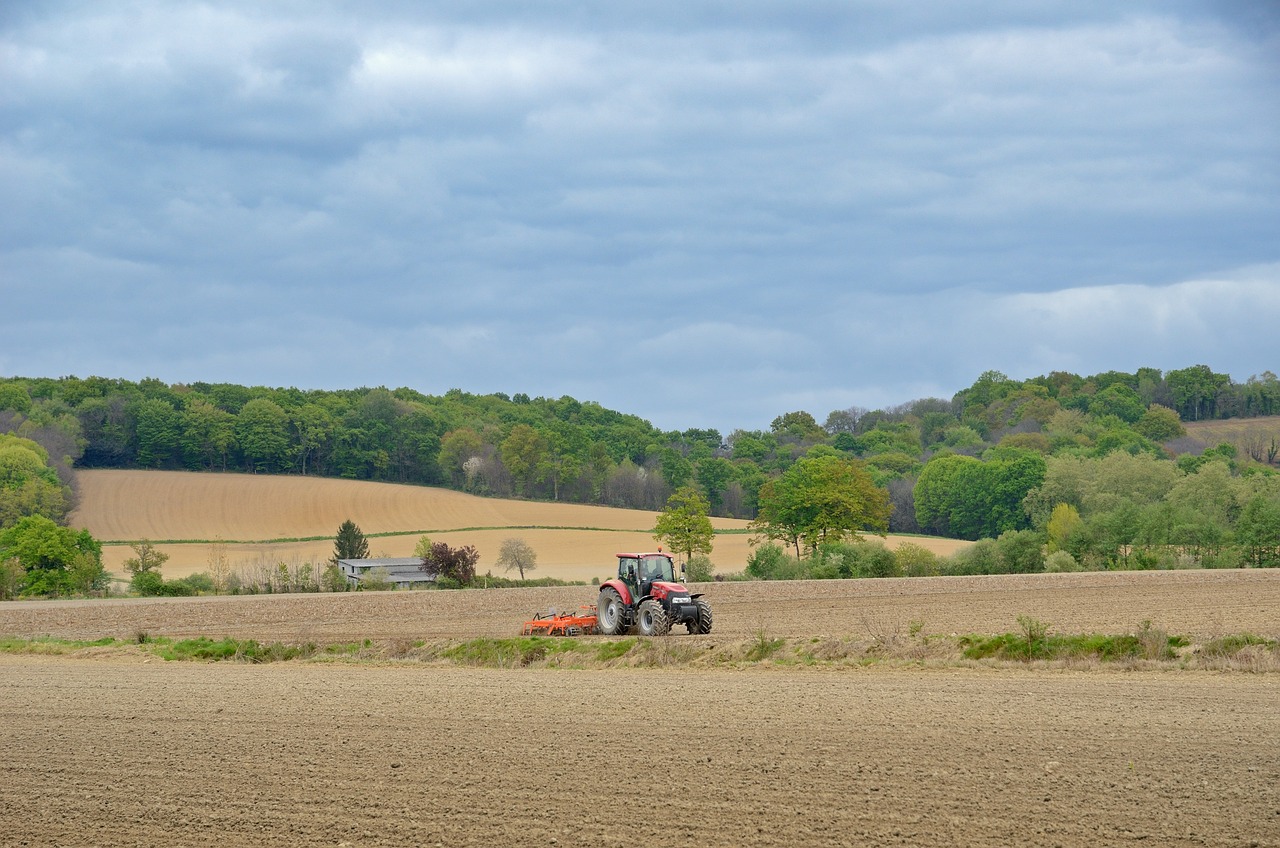
The carbon footprint associated with producing arable crops varies widely depending on the crop being produced. Understanding what the main sources of emissions are enables a strategic approach to reducing the carbon footprint of producing any given crop.
Speaking in a Climate Farm Demo webinar titled ‘Impact of tillage on GHG emissions’ Pete Berry from ADAS shared a breakdown of emissions sources for different crop types.
Types of greenhouse gas emissions associated with arable crop production
Sources of greenhouse gas emissions from arable crops can be divided into the following categories:
- Embedded emissions include the carbon emissions associated with the manufacture of inputs. The include emissions released during ag chemical manufacture, nitrogen fertiliser manufacture, the manufacture of other fertilisers and seed.
- Energy emissions come from the fuel and the production of electricity which is used in field operations and drying of grain.
- Direct and indirect nitrous oxide emissions, which can come from the application of nitrogen fertiliser or organic manures. This category also includes the nitrous oxide emissions from the decay of crop residues after they are incorporated into the soil.
Emissions by crop type
To compare the carbon footprint across different crop types, emissions are expressed as kilograms of carbon dioxide equivalent per hectare (kg CO2e/ha). This means the warming effects of carbon dioxide, nitrous oxide and methane can all be accounted for, although in arable production, carbon dioxide and nitrous oxide are the main greenhouse gases.
Nitrogen fixing crops like peas and beans have the lowest carbon footprint of around 600 – 800 kg CO2e / hectare. This is mainly because they do not rely on any inorganic nitrogen fertiliser, the production and application of which has a high carbon cost.
Low nitrogen input crops like oats and barley have 1,000 – 2000 kg CO2e / ha, while high nitrogen input crops like winter wheat for milling and OSR have high carbon footprints of over 2,500 kg CO2e /ha.
Feed wheat vs beans comparison
Taking feed wheat as an example, Pete shares that about half of the emissions are associated with N fertiliser, with 24% from the manufacture of nitrogen fertilser and 27% from the nitrous oxide emissions after application. Another 17% emissions are associated with fuel and electricity, around half of which are associated with tillage practice.
Beans are radically different, with almost half of the emissions (46%) associated with the field operations. This is because hardly any emissions are associated with fertiliser for nitrogen fixing crops.
Carbon footprint associated with field operations
Speaking in the webinar, Pete shares that the carbon footprint associated with field operations is based on energy required to carry out the operation, with an emissions factor being used to convert fuel use into kg CO2e.
Operations include cultivations, spraying, fertiliser spreading, harvesting, grain carting and grain drying. The emissions factor used by Pete is 0.085 kg CO2 emitted per MJ of diesel energy. The energy use required depends on soil type, with the figures shared here based on loam soils.
Unsurprisingly, ploughing has greatest carbon footprint at over 100kg CO2e /ha. Power harrowing and discing are next, at approximately 70% of ploughing. The spring tine harrow, conventional drills or rolling are all much lower.
Soil type has an impact. Ploughing on a clay soil requires 70% more energy to do that operation compared to if it were on a loam soil, and is more than double than that required on a sandy soil.
When looking at greenhouse gas emissions associated with combined tillage practices, ploughing, followed by power harrowing, then drilling then rolling would require over 200 kg CO2e / ha. Direct drilling alone, for comparison, requires less than 50 kg CO2e / ha. Other combinations such as harrow, drill & roll or strip tillage have intermediate associated emissions.
What does this mean?
Reducing emissions often aligns with cutting costs and improving soil health. For example, although more fuel will be consumed when travelling over a clay soil, building soil health through increasing organic matter levels will improve the soils texture and water retention, therefore travelability will be improved and less fuel will be used – resulting in lower emissions. Reducing the need for synthetic fertilisers and lowering fuel use will not only reduce carbon emissions, but could also reduce input costs.
Another ‘piece of the puzzle’ is the potential for carbon storage in arable crops and soils. Different crop types will store varying volumes of carbon, and varying the rotation through the use of cover crops, companion crops and catch crops may not only store more carbon in the soil, but also reduce the need for synthetic inputs further along the rotation.
Ultimately, there is never one single driver of decision making in the crop rotation. Carbon will not singlehandedly determine which actions are taken, but a crop’s carbon footprint can often highlight other inefficiencies or room for cost savings and can indicate where useful tweaks can be made.
Explore the full discussion in the ‘Impact of tillage on GHG emissions’ webinar, now available on the Climate Farm demo YouTube channel.