
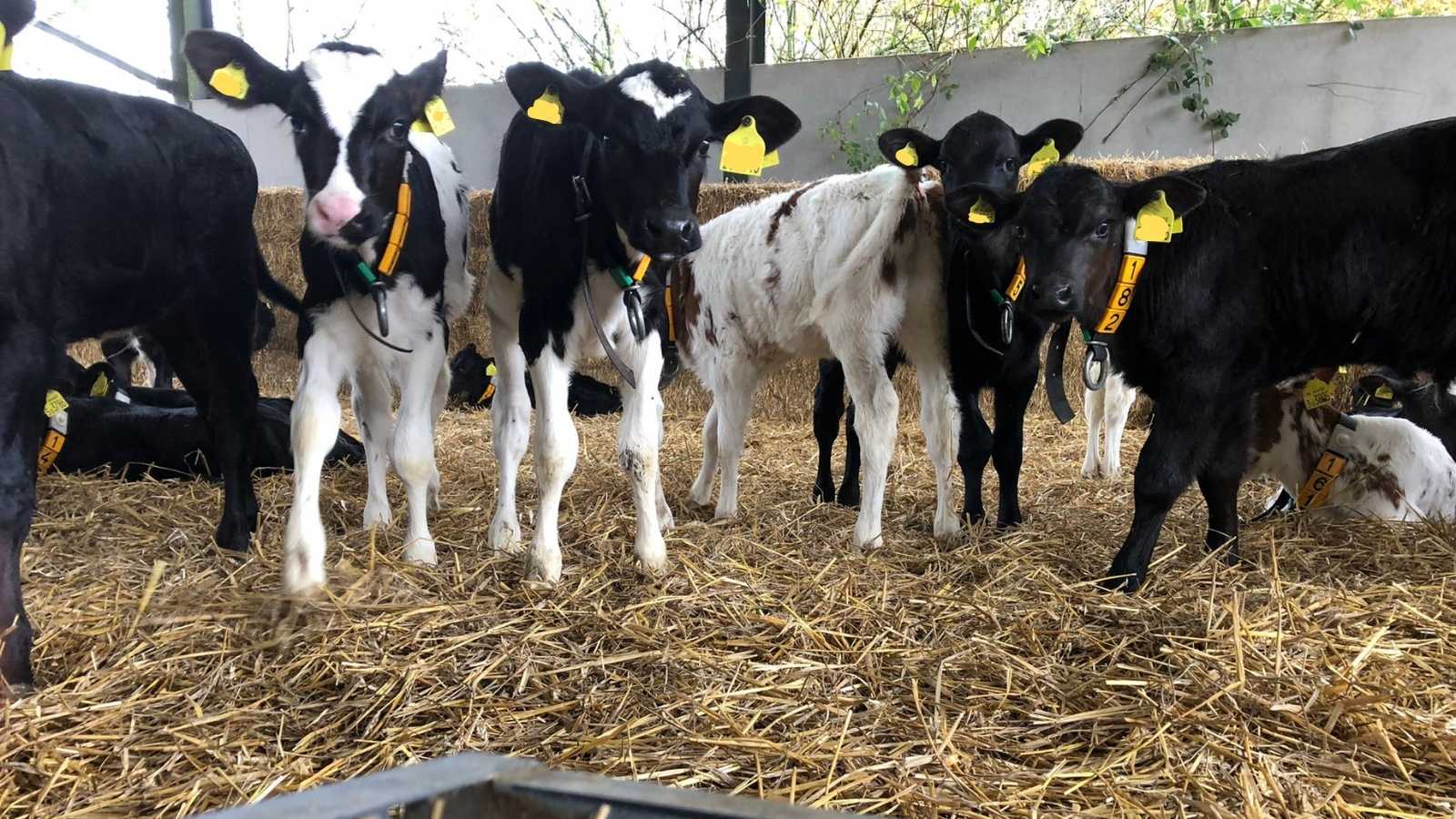
Laura Palczynski, IfA’s Livestock Project Manager, was invited to speak at the Animal Welfare Foundation’s session “Calf Welfare: is it good enough?”, at the 2023 BCVA Congress. Here’s what she learned from the first day…
Alex Bach’s keynote address ‘Heifer rearing: Paving the road for a healthy, productive and profitable life’ highlighted the need to consider the entire growing phase and biological functioning of calves to achieve the most cost-effective growth. Growth rate in young calves is correlated with future milk production, and Alex stressed that we should think in days – we don’t say weeks or months in milk, we say days in milk – the same should apply to our rearing targets.
He also shared some tips to optimise growth and feed intakes. If average daily gain of around 1kg/day is the target, then weaning should occur once solid feed intake is above 1.5kg/day. Offering chopped (2cm) forages like straw can increase total starter intakes – the forage acts like a toothpick to clean the rumen walls for more efficient functioning. Grouping calves can also increase solid feed intakes, because they learn from and copy one another. Attention to heifer feeding needs to continue after weaning to ensure growth rates remain on track to achieve age at first calving of around 670-730 days (22-24 months).
It was also great to hear about ImmunIGy: A novel pen-side test for checking calf immune status (failure of passive transfer from colostrum) later in life. This could be a useful tool at markets, calf rearing units and collection centres to identify high-risk calves, and feedback to source farms about their colostrum management.
The AWF session brought together a great panel of speakers, of particular interest for me was Charles Ellett from The Ethical Dairy – a large-scale dairy farm who keep calves and dams together whilst still collecting enough milk to produce cheese and ice cream. The session focused on welfare beyond health, meaning that welfare is more than just keeping calves healthy.
I focused on findings from my research – that (historically) there has been a perceived lack of demand for calf services on farms and throughout the wider industry. Farmers might not ask about their youngstock, and advisors/vets might not ask about them, either, so problems could continue undetected, and easy wins might be missed. Calves need an advocate – whether that’s a passionate farm team member with great attention to detail, the farm vet, or another advisor – to ensure they get the attention they need to bolster farm performance now and in the future.
Discussion brought up other issues, including stressful experiences like live transport of calves, where style of driving, number of trips and duration of journey can all have an impact. I think increased dialogue between stakeholders (including commercial competitors in some cases) would be really beneficial to avoid unintended consequences and streamline our systems. That’s why I’m really looking forward to continuing the Calf Action Network, and seeing what the next iteration of the GB calf strategy will look like.