
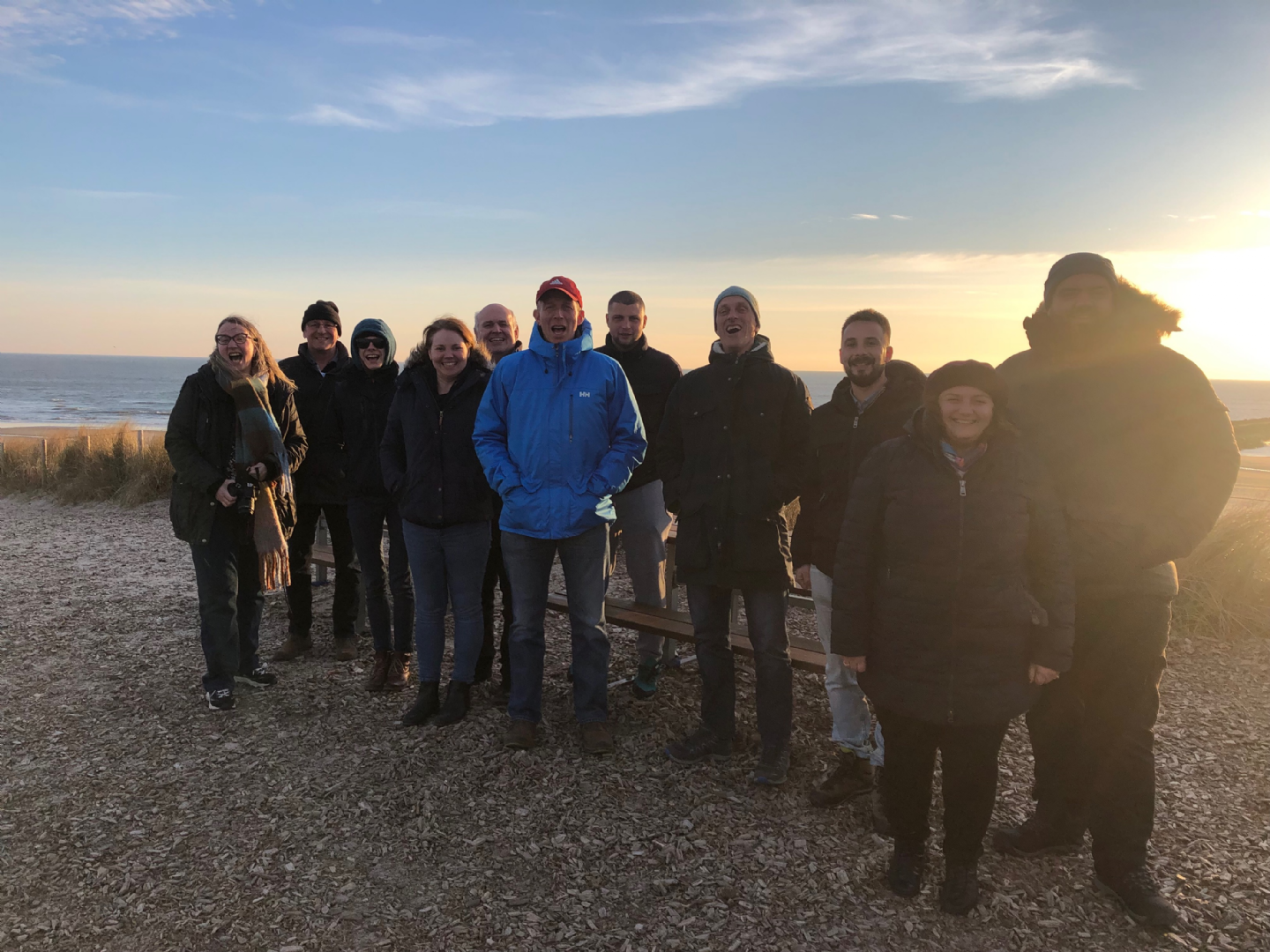
Head of IfA Livestock Dept. Lisa Morgans, writes about her recent trip to Denmark...
A CEV stands for a Cross Exchange Visit, which is otherwise known as a farm study tour. We organise these cross-border visits with our European partners as part of EU funded projects to exchange ideas, farming techniques and generate knowledge. CEVs help to build understanding about different approaches to farming and spark innovation as well as friendships. Read on to hear about our recent CEV and how you can get involved.
On 15th March, 3 dairy farmers from Carmarthenshire and Somerset along with 3 IfA members of staff travelled to Denmark as part of the DISARM project. DISARM aims to promote and share best practice and innovation for optimising farm animal health and reducing reliance on antibiotics across European livestock production. CEV are a vital part of learning from other countries that have successfully reduced antibiotic use or have innovative ways of safeguarding animal health. Denmark was no exception. With some of the strictest farm biosecurity measures in Europe and exceptionally low levels of disease, we were keen to find out how they managed it!
Over 3 days we visited 5 cattle farms and started the exchange with a series of talks by SEGES – project partners in DISARM. SEGES shared the secrets to the Danish success and the Holy Grail of any farm health programme or initiative – harmonised livestock movement records with farm and cattle data via a centralised database (called Dairy Management Software), enabling the industry to measure and monitor not only animal health but farm performance, efficiency and medicine use. The database is fed by various external companies that capture a range of information from slaughter weights, production parameters and financial data. It is so well embedded in dairy farming in Denmark it provides easy-to-understand information for ~2800 dairy farms as well as access to this data for 200 advisors and vets, and all through the cloud via an App! Needless to say, they do not seem to have any internet connectivity issues on Danish farms.
Cattle health
Disease monitoring and surveillance in Denmark follows a similar process to the UK, except they are much better at it (i.e., voluntary screening for disease, ongoing surveillance, any action taken decided by the farmer, with subsequent mandatory screening after a period of voluntary initiatives). They have hardly any TB, Bluetongue or Mycobacterium and have officially eradicated IBR, BVD and Salmonella, although they are still monitoring for many of these including Salmonella. Denmark is probably one of the few countries testing for Salmonella on dairy farms and as a result have found 10.9% of herds test +ve. SEGES conduct biosecurity visits and have discussions with farmers about how they might reduce the risk of Salmonella (being zoonotic) and eventually eliminate it from their farm. The industry is generally very supportive of the scheme and want to see the disease stamped out. Therefore, after a period of voluntary initiatives to reduce Salmonella, new legislation is coming that will limit the sale of live animals, introduce a mandatory blood test of calves, introduce mandatory inspections 2 x yearly with resultant action plans for +ve farms. Sounds oddly similar to TB control here, I must admit!
Like many European countries, Danish rules around how dairy farmers treat common infections like mastitis differ to the UK. Milk samples prior to treatment of mastitis are mandatory and farmers can only treat with antibiotics if they are on the National Health Plan, which requires a vet visit every 2 weeks or (as many organic farmers choose) participation in the stable school programme (a series of farmer group meetings). It's not all good news for Denmark though, antibiotic use in calves is increasing, which they suspect is partly related to respiratory disease and partly due to increasing herd size. They also have a large veal industry, which brings together lots of calves from multiple sources causing substantial immune stress.
Carbon
Similar to here in the UK, carbon is talk of the town. SEGES took us through their carbon auditing tools and how they are also working out the carbon footprints of their farm. Like here, there are multiple ways of doing this and they are producing a tool in addition to Arla, which is one of the biggest milk processors in Denmark. Like us, they are experiencing the same difficulties in what to include or not to include in their calculations so have taken a 2-method approach to include a full life cycle analysis and a narrower assessment to compare Danish farms with one another. They are are studying the impact of feed additives for cattle as an approach to suppress methane emissions and finding promising results using 3NOP with up to 34% reduction in methane. Watch this space!
Denmark’s dairy industry differs to here in the UK in many respects though. The average milk yield for an organic dairy cow is 10,500kg / cow / yr and a non-organic herd is averaging 11,500kg / cow/ yr. They feed a high-quality forage diet but largely through a mixed ration (containing mostly clover grass silage & maize silage with varying proportions of grains, beets & whole crops, soya beans or rape, cake and fats/minerals) with many conventional herds choosing not to graze their cows at all. In fact, only 22% of herds were grazing in 2019, including organic herds which have to, compared to 70% in 1988.

The farms
The first farm we visited was a high yielding (~11,000kg/cow/yr), 250 strong organic herd with milking robots. The farmer – Torben - was 3rd generation with a passion for data and learning from others, as well as enthusiastic sons ready to take the farm on. Torben’s management of staff was commendable; a major driver to move to milking robots was to give his staff a better work life balance and he was clearly reaping the reward. The first thing that struck me was how clean the farm was. This was reflected in the farm management – a closed herd, using genomic tested semen with an AI technician on farm every day with their own farm specific kit. Biosecurity is everything in Denmark. Torben also takes a prudent approach to antibiotic use for mastitis where he was PCR testing all mastitis cases to identify causative bugs and to inform drying off procedures. Apparently quite common in Denmark! Interestingly, Organic dairy farms in Denmark cannot dry cows off with JUST teat sealant, which seemed unusual compared to the UK. Any cows with an identified bacterial infection and a SCC above a certain threshold received antibiotics, which you can imagine, was not many! Most mild cases of mastitis received udder mint and no antibiotic treatment.
The most intriguing practice we saw was the use of nanny cows to nurse the calves. Heifer calves were tubed 4L colostrum straight away from the dam and were then taken away, grouped with 3-4 other calves and a foster cow, which was usually the cows with high SCC or lameness (bull calves were fed pasteurised waste milk at 8L a day and then sold to a local veal farm). These groups were organised by age and kept on straw beds and ensured a return from cull cows as well as cheap source of feed for the calves. Torben’s calf mortality demonstrated that this was an effective system for him with very few deaths or treatments.
Feeding adult cows high quality, wet, palatable grass silage as well as slatted floors, deep bedded cubicles and straw bedding for high care cows were his key to good legs and feet.

The second farm was equally well managed but quite a different farm owner to Torben. A 200-cow herd reaching ~12,000kg/cow/yr with many cows giving 45kg of milk a day, and the highest reaching 95kg a day. The feed was packed full of late cut silage, maize and concentrate and the DM of the silage was surprisingly low, but evidently very tasty for the cows! The focus here was production due to large amounts of historical debt from farm investment and expansion. The farmer – Bjarne – was driven and meticulous with any SCC above 80,000 annoying him! Running a closed herd for about 40years and using the popular Viking genetics to improve his cow’s performance, Bjarne had an impressive herd and again, sparkling clean set up. Milking 3 x day in the traditional herringbone parlour, Bjarne saw little mastitis or general health issues but did struggle with fertility due to such high yielding cows. When pressed about the particularly high body condition of his cows and any subsequent problems, it appeared there was some ketosis and metabolic disease. Can such high yielding cows produce milk without these diseases?
Key to success
Regardless, the cows looked very content, which I believe was because they were on some of the comfiest and cleanest straw bedding I had seen in an indoor housed herd (fresh straw provided 3 x day)! And the water troughs, well... they were literally sparkling! The impact of dirty water should not be underestimated!

On arrival the calves are weighed, given an intranasal respiratory vaccine and put into larger groups. No routine medication is given and in the sheds where there was more space and lower stocking density, there were less health issues and better LWGs. The calves are fed 2L twice daily in the first week and weaned off milk once ~80kg in weight and fed maize silage. Any sick calves were treated with Florfenicol and given a white ear tag for easy identification. He has also found that his female staff were much better at caring for the calves, and he aims to employ women because of this! After 4 weeks the calves were given a 2nd vaccine but finding the right time to vaccinate between calves getting sick due to the mixing and transportation was tricky. Despite this farm being an exemplar model of a veal system, the antibiotic use was still around 2 daily doses. Can he reduce this? Rasmus is optimistic he can. It does beg the question though; can we manage a veal farming system without relying on antibiotics?
Key to success
Close and trusted partnership between dairy farmer and beef/veal farmer.

On the final day, we visited our last 2 farms of the CEV. The fourth farm was a robotic milking Arla farm with a very similar set up and performance to a UK farm. 215 Friesian x Jersey cows fed on grass and maize silage, rolled barley and oilseed rape, but yielding 12,500kg/cow/yr and housed indoor on cubicles and slats with bull beef sold for fattening (with some fetching 1000kroners/£87 per calf). Calves were fed tested-stored-defrosted colostrum and reared in small groups in hutches, which were then moved every week for cleaning. As a result, very little respiratory disease or scours was seen.
The farm was struggling a bit with mastitis (25-39%) and lameness from Digital Dermatitis, which the farmer was convinced came from an outbreak on neighbouring farms. He did have some interesting approaches to manage these issues (salicylic acid claw bandages) and was a keen user of on farm culture plates for identifying mastitis pathogens, but in my opinion was perhaps possibly too keen to reach for the injectable antibiotics to treat toxic E.coli cases. He noted that he was quite densely packed in the shed with at least 66 cows per robot and 2.5 average visits. In his words though – “instead of changing the barn, I change the cow and have smaller cows”. To his credit they looked very well, and they were doing a great job producing milk - feed efficiency of 95-105%, which is very good.
He was a big fan of the robots and had had Lely’s for ~13 years. Another farm data nerd! He relied on the rumination and robots’ data to ‘read his cows’ and know which ones to check for heat and illness, as well as how quickly they recovered. However, he did say he found the conductivity data too sensitive with too many false alarms... not sure his mastitis rate would agree! One of my favourite hacks on this farm was the feeding of charcoal (assumed activated charcoal) in the milk for treating cryptosporidium in the calves. Will be looking that one up!
Key to success
Breeding cows to fit the system and selecting for health and vigour.
The final farm was full of the most surprises. Another organic dairy farm run by a 2nd generation farmer - Gert – alongside his wife Anna and heavily inspired by the regenerative farming movement. They were milking 300 cows 3 x a day through a rotary parlour (albeit only 90-100cows per hr!) and were big fans of cross breeds, with yields of ~10,500kg/cow/yr. However, they were planning to go to 2 x day with the rising cost of inputs. They aimed to make milk from their own forage and avoided maize like the plague! They have also been experimenting with alley cropping and are part of a local milk cooperative processing ~60million L and making the most delicious cheese – tried and tested! https://www.organicdenmark.com/them-andelsmejeri

It was heart-warming to see that Gert had adopted the use of Cow Manager ear tags after his visit to the UK last year (see blog). He had been so impressed with Northleaze farm and how they were using them for monitoring cow performance and recovery, he had them installed as soon as he returned!
My favourite part was their approach to using nanny cows. Similar to farm 1, the nanny cows are often the high SCC, lame cows that are to be culled at the end of their lactation. However, they are still producing lots of milk and are a cheap and potentially undervalued nutritious source of milk for the calves. After calving, the cow stays with her calf for about 3 weeks and is then separated. The calf is moved into a group with a nanny cow, where they stay until weaning at ~3-4months old. It was slight bedlam in the main shed with the nanny cows, dry cows and heifers in a maze of pens and gates (some had escaped the day we visited!) but again, there was a lot of deep and clean straw bedding and although Gert acknowledged how hard it can be to manage mastitis on straw bedding, the system appeared to work! One approach that Gert used was to spray the teats of all dry cows every day as well dry off individual quarters that got mastitis as a way of reducing treatments (considering Organic herds cannot administer their own treatment and are reluctant to call the vet out this is fairly common)! The main milking herd were on deep sand bedding in a separate cubicle shed where beds were scraped every day and topped up weekly, so the mastitis risk was manged differently depending on the group/cow.
Key to success
Aiming for a self-sufficient system with home grown forage, improvements to soil, making use of cull cows and a ‘closer to consumer product’ (the cheese manufacture business).
The lessons learnt
The key lessons for me were 2-fold.
1) The Danish approach to biosecurity and farm visitors was excellent. We all had specific boots purchased for this trip (so had not been on UK farms), we were dressed in single use biosecurity suits for each farm visit and were asked to keep away from dairy cows for 24-48hrs before we visited. Maybe impractical but very effective at reducing spread of disease.
2) the feed on all the farms was very different to back home. They seemed to feed a lot more clover grass silage, with less DM and clearly better intakes, which we presume was from better palatability. As with any CEV, you are given a lot of food for thought and sometimes come away with more questions than answers!
If you are interested in coming on a CEV with us, please get in touch at lisam@i4agri.org