
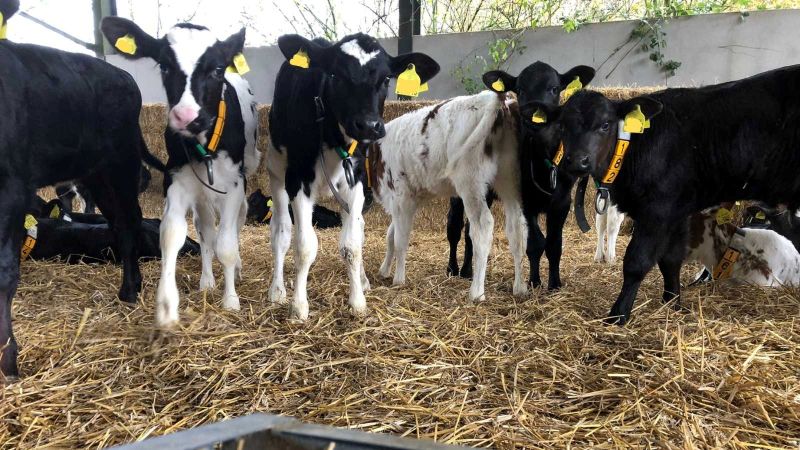
Technology can help improve consistency in calf rearing, supporting calf health, reducing vulnerability to disease and promoting stronger growth rates.
At the Calf Action Conference in April 2026, Bianca Theeruth from Cargill shared practical examples of how calf rearers can use technology and data more effectively to support day-to-day management and decision-making on farm.
Using data in calf rearing
Bianca began by highlighting the value of data. “Without data in calf rearing we are simply reacting and guessing, but by using it we can anticipate problems and take action to improve outcomes,” she explained.
One example discussed was feed intake, which often reduces before visible signs of illness appear. If intake is being monitored, calf rearers can identify changes early, check calves more closely and respond sooner to potential health challenges.
Measuring, automating and predicting
To make effective use of data and technology, Bianca suggested progressing from observing calves to measuring, automating and predicting.
Importantly, this does not always require high-cost investment or complex systems. Simple technologies can still make a significant difference to consistency in calf management. For example, using a thermometer when mixing milk replacer can help ensure calves receive milk at a consistent temperature, while weigh bands can support regular monitoring of growth rates and performance. Recording this information over time allows trends to be identified and management decisions to be based on evidence rather than assumptions.
Automation can also reduce variation in calf management routines. “Whether it is milk feeding or introducing concentrates, automation helps ensure calves consistently receive what the rearer intends to provide,” Bianca said.
She highlighted how automatic milk mixing systems can deliver a more consistent mix and temperature every time, supporting feed intake in young calves. Temperature and humidity sensors can also be used to help optimise ventilation and environmental conditions within calf housing.
Another key theme was the value of predictive management. Data collected through automatic feeders, for example, can help calf rearers identify changes in feeding behaviour and spot potential issues before calves become visibly unwell.
Smart use of technologies
Bianca also encouraged attendees to think broadly about technology and innovation. Improving technology use does not necessarily mean purchasing the latest automatic feeder, and she suggested AI tools such as ChatGPT or Claude can help generate ideas, ask better questions and support problem-solving on farm.
However, she stressed that technology is only valuable when it is practical and supports a clear objective.
“Technology should be used to achieve less variation in calf management, as this will result in healthier calves,” she concluded.
Project link
Many of the themes discussed during Bianca’s session closely align with the work of the DECIDE project, which Innovation for Agriculture is involved in delivering alongside partners across Europe. The project is developing data-driven decision support tools to help identify early signs of disease and support faster diagnosis in calves and other livestock species.
By combining animal health data, predictive modelling and practical farm insight, DECIDE aims to help farmers and advisors make more informed decisions that support animal health, welfare and performance. Innovation for Agriculture’s role focuses particularly on calf diseases in dairy and beef systems, as well as ensuring farmer feedback helps shape the development of practical tools for use on farm.
Find out more about the DECIDE project at: https://decideproject.eu/