
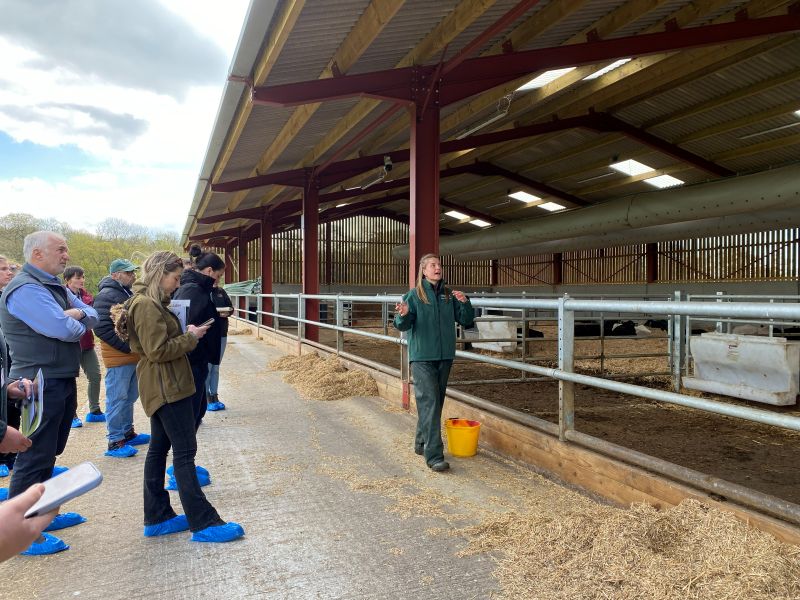
Young calves are vulnerable to fluctuations in temperature, which means environment matters inside calf sheds at all times of year. A stable environment, free of draughts and with clean dry bedding, will reduce disease risk and support calf growth.
Speaking at the Calf Action Conference in spring 2026, Chloe Rodriguez from Galebreaker talked through the key principles to create an environment in which calves can thrive.
Provide enough light
Calves need 200 lux for 16 hours a day. This can be achieved via a combination of natural and artificial light. Also, really important for them to have 8 hours of darkness below 30 lux.
Maintain warmth
Young calves are vulnerable to fluctuations in temperature and need to be kept in their thermoneutral zone especially during their first 4 weeks of life. Ensuring they have dry bedding and are protected from draughts is critical. Additionally, calf sheds built of concrete will draw heat away from young calves, as they like to lie against something solid. Chloe suggested positioning straw bales in front of concrete walls and to prevent draughts at calf height.
Keep bedding dry
Dry bedding is essential to maintain good hygiene and warm calves. Good drainage will help prevent moisture underfoot and if the shed struggles with drainage adding something under bedding like lime or sawdust to absorb moisture will keep the environment dry for calves. Positioning drinkers at the front of the shed, away from the bedding area can also help.
Ensure fresh air
Fresh air is different to moving air, as it requires an exchange of air with stale air leaving the shed being replaced by air from outside.
In summer, many calf sheds may require opening up to increase the number of air exchanges to prevent them getting too hot. A good ridge and open sides can enable warm, stale air to rise and leave the building, drawing fresh air in.
Installing positive pressure ventilation tubes, which have the number and spacing of holes calculated to throw air out a certain distance and hit animals at a specific speed, can optimise the number of air exchanges without exposing calves to draughts. This is critical during the winter when closing the shed up to maintain temperature.
Assessing ventilation
The movement of air through calf sheds has a real impact on the quality of the housed environment calves are living in. Too fast and calves risk getting cold and the vulnerability to disease that comes with that, too slow and there are insufficient air exchanges within the shed, creating an environment where pathogens can build up and spread.
In the below video, Chloe demonstrates letting off a smoke bomb inside a calf shed to assess air flow.
Exploring consistency
The Calf Action Conference brought together those working across the dairy and beef sectors to share practical experience, explore innovation, and contribute directly to the delivery of the GB Calf Strategy. Sessions throughout the day explored how technology and training can support consistency in calf rearing practices. Read the latest on the GB Calf Strategy.