
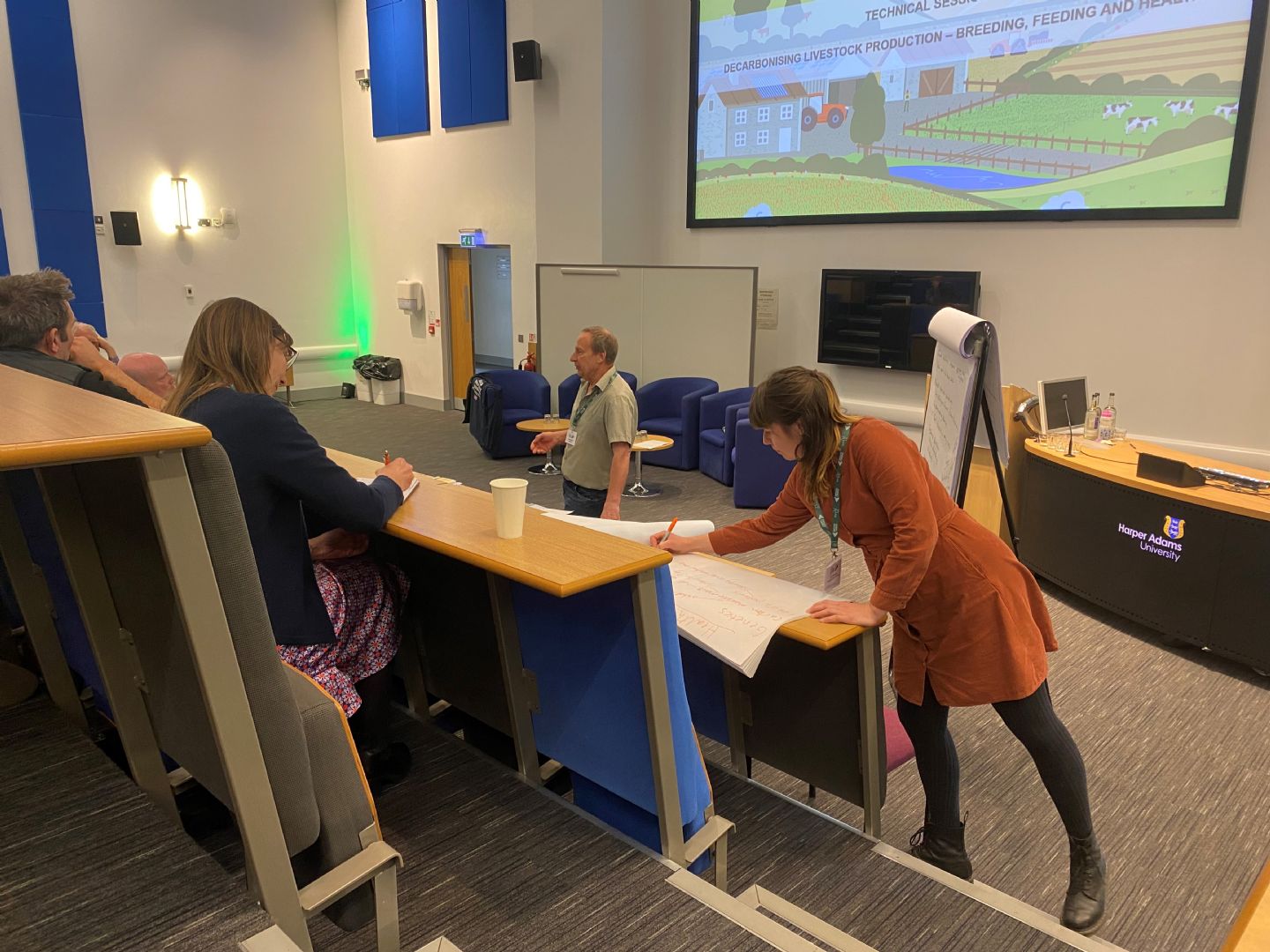
Speaking in the decarbonisation of livestock production technical session at the RASE Farm of the Future: Net Zero in Practice event, dairy farmer Robert Mallett shared how he has approached optimisation of health to improve efficiency in his 230-cow dairy herd.
Farming in Wiltshire, Robert milks three times a day while aiming to make the best possible use of grazing. To him, sustainability means efficiency. “It means getting more from less. We need to ensure good use of resources, as having high yielding cows can mean less cows, less slurry and less challenges,” he said at the event.
He highlighted that the current pressure on UK livestock farmers to decarbonise is similar to the pressure on farmers to reduce antibiotics use back in 2017. “As farmers we’ve halved our antibiotics use in the last six years – an amazing achievement,” he said.
He reflected that farmers achieved a striking reduction in use of antibiotics by understanding when they are needed and when they are not. He also said that by reducing antibiotics use, farmers have saved the cost of those medicines, so reduction in use has benefited farm businesses as well as the environment and the world population in general.
In terms of emissions, Robert stressed the importance of understanding a farm business’s carbon footprint, as you must be able to measure something to manage it.
Although he is focused on maximizing use of grass, Robert acknowledged the limits of relying on grazing alone to decarbonise dairy production. “We’ve got the advantage over pigs and poultry that cows will graze, but we can’t graze in February, during a flood or in a drought,” he said. “Grazing cows is never going to produce the billion litres of milk that is sold in the UK every month.”
Robert spoke about three areas of focus which have helped him to optimise his health of cows and youngstock, improving the efficiency of the farm business. These were genetics, the use of monitoring tags and colostrum management.
Using genetics to improve efficiency
Robert shared that the progeny from the best bulls go to slaughter 80 days earlier than average. “An animal that can fatten 80 days quicker is worth something like £300 more than one that doesn’t, as long as they’re equally easy calving that’s a big win.”
He added that there is almost no cost to have that extra gain, estimating that the better genetics would cost approximately £12 per AI straw compared to £8 to £10. However, the challenge in the current system is that the dairy farmer does not get the payback, unless they fatten their own cattle.
He also spoke about opportunities in dairy cow breeding. “There are bulls whose daughters are approximately £1,000 more productive than the average and also live 130 days longer,” he noted. “There’s now opportunity to select much more strongly for the best dams using sexed semen.”
Use of monitoring tags
Robert shared that the use of monitoring tags has been a tremendous advance in looking after animals, as the tags detect when cows are coming into heat, let you know when they are sick and also give data to look back on performance.
The tags provide an early warning if a cow is showing signs of possible health issues. “If a cow stops eating, it lets you know to check that specific animal.”
The early warning system has allowed Robert to use fairly passive interventions such as painkillers, yeasts or energy drinks to help the cow feel better, enabling cows to stay healthy, productive and reducing antibiotic use in the herd.
He also noted that the data from monitoring tags can be used after something has gone wrong to work out how to prevent it from happening again, especially around transition management. He said 80% of cow diseases occur within three weeks of calving, mostly due to the cow being deficient in calcium. The monitoring tags enable looking back at what the cow’s data in the days before calving to work out what went wrong, to assess if management changes could be made to prevent the same situation occurring again.
Colostrum management
Robert highlighted that currently 8% of cows born on farm in the UK die before they are two years old, but on the best farms that figure is under 2%.
He said that lack of colostrum is one of the main reasons for calf deaths, but also for calves not reaching their genetic potential. If some calves have died from calf diseases like pneumonia, there will be more that have been exposed and have damaged lungs as a result, so will never reach their potential growth rates or finishing weights.
Robert added that he now tubes every calf with 3.5 litres of colostrum at the earliest opportunity, to know that every calf has had it.
The decarbonisation of livestock production technical session included breeding, feeding and health insights. In addition to Robert, contributors included Anna Dinsdale from AB Vista, Sarah Morgan from Precision Grazing, Ben Harman a Charolais breeder and chair of the British Cattle Breeders Club and James Wright from Breedr. Watch the whole session here.