
When multidisciplinary groups come together to explore a shared problem, it is possible to identify and take forward solutions to some of the more tenacious ongoing challenges in agriculture.
In 2023, Innovation for Agriculture facilitated a participant led research group in the midlands, which focused on the links between animal health and welfare and farmer wellbeing. The project, which was part of the Agricultural Immersion Centre, was funded by the Elizabeth Creak Charitable Trust. Alongside the animal health and welfare group, Innovation for Agriculture also facilitated another group in the midlands which focused on slurry management solutions, and a group in the southwest which focused on nature friendly farming practices.
In this blog, we will explore how the midlands group focusing on animal health and welfare and farmer wellbeing came together, identified an area of focus and investigated the issue and potential solutions. The group includes vets, vet techs, a local authority animal health and welfare inspector, academics working on farmer wellbeing and representatives from the Farming Community Network (FCN), as well as regular communication with farmers to ensure farmer engagement throughout the project.
Identifying farmer wellbeing as a factor which impacts animal health and welfare
As a participant-led project, the area of focus was identified by bringing together a regional group of farmers, vets, farm advisors and policy makers or influencers for an online workshop in January 2023. The purpose of the workshop was to understand participants’ perspectives on the ongoing challenges in the industry, and to identify any gaps and opportunities to work together to make a difference. Digital tools were used to collect ideas, and two themes emerged – slurry and muck management and animal health and welfare – which led to the formation of the two midlands groups.
The animal health and welfare group held a second online meeting, with the purpose of defining:
- The problem they wanted to focus on
- What the group was going to try to address
- Potential activities, contacts or opportunities to learn more about the issue
The discussion kept coming back to there being a link between farmer wellbeing and animal health and welfare issues, where early intervention could potentially prevent cases from escalating to prosecution.
Group research
To take the project forwards, the group visited a local authority office to see anonymised case studies that had gone to prosecution. Poor farmer mental health was acknowledged as a factor in many cases, which may be triggered by a life event such as divorce or family illness. The group learned that support is available from the local authority if requested, for example there is the option to sign animals over to the county temporarily to take the pressure off while fixing an issue. However, uptake of this option is low because the local authority is seen as an enforcement body, not an entity that can help. This perception has been reinforced as ongoing cuts to budget have resulted in the local authority being unable to do proactive visits to farms, further cementing the idea that their involvement only follows a complaint and so is something to be avoided.
Who can intervene when there is a farmer wellbeing issue impacting livestock health and welfare?
People who are going onto farm regularly, such as vets or other farm advisors, are often in a position to see that a farmer wellbeing factor might be influencing livestock health and welfare. However, it is hit and miss whether an individual vet or advisor is equipped with the soft skills to be able to effectively help the farmer. Furthermore, putting the responsibility onto vets and other farm advisors can contribute to burnout for people working in those professions, if they are increasingly required to go above and beyond what they are trained to do to support farmers who are struggling.
It was identified that FCN clearly have a role, as vet practices and local authorities will work with them, but there are some limitations. How do you do a referral? And whose responsibility is it to do that safeguarding? And how can someone flag a concern about animal health and welfare and farmer wellbeing without getting a farmer into trouble?
A member of the group suggested that the loss of tight-knit farming communities has led to a gradual erosion of community-based support available to farmers, and increased loneliness. The concept of a ‘farming circle’ was suggested, to strengthen rural communities via the exchange of favours.
Farmer feedback
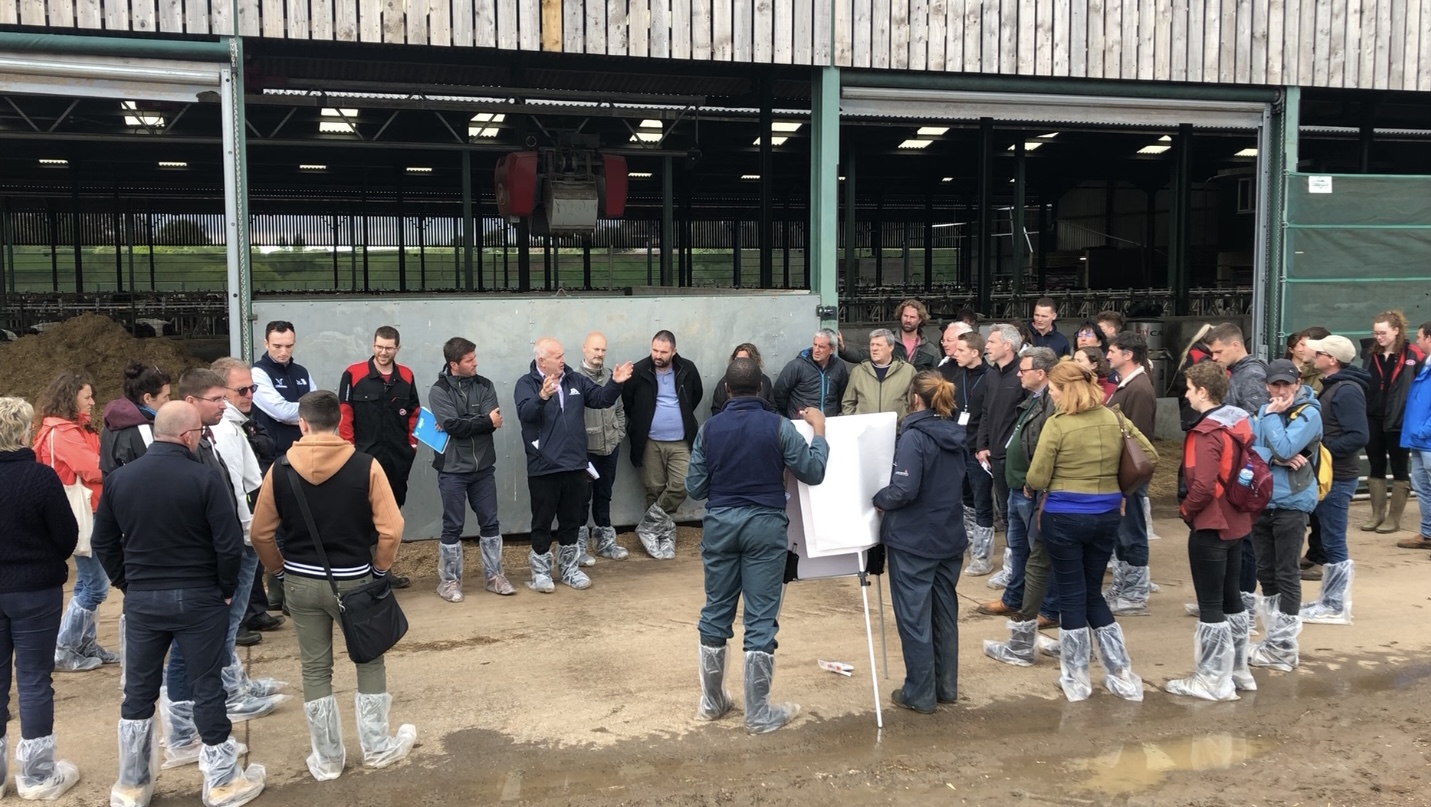
Having come up with the farming circle concept, the group took it to a farm walk event to share it with a group of farmers and get feedback. Although there was consistent agreement that there is a need for support for farmers who are struggling, to help prevent escalation of animal health and welfare issues, there were concerns raised about the farming circle concept.
This included concern that some members would become the ‘givers’ by more frequently volunteering their assistance, while others could potentially take advantage of the system. There was also the question of how it could be coordinated and by who, with recognition that FCN has the skills, but does not currently have the resources to facilitate it on top of their existing activities.
Ongoing research
According to a PhD student at the Royal Agricultural University (RAU), the link between animal health and welfare and farmer wellbeing has not yet been the focus of much research. This student’s work will explore the consequences of failure by industry to support farmer wellbeing, looking not only at the impacts on farmers, but also their livestock, the consumer, and the supply chain as a whole.
Learning from NY FarmNet
The next step to the project came when the group engaged with David Rose, also from the RAU, who put the group in touch with NY FarmNet, from New York state. NY FarmNet provides a one stop shop for farmers to access free technical, financial and wellbeing support. The advisors work in partnership with each other, meaning the service provides a gateway to other support which farmers may need, but not necessarily ask for in the first instance.
Representatives from NY FarmNet spoke to the group to share how their model works in practice. They also shared that they are reliant on policy support to maintain their funding, so the team continues to dedicate efforts to lobbying and keeping farmers’ needs at the forefront of policy makers’ minds. Read more about the insights gained from the discussion with representatives from NY FarmNet here.
Having been inspired by the NY state model, the group is now investigating options for the potential development of a similar model that could work in the UK.
Throughout the year it has been inspiring to see how the animal health and welfare group has come together to address how best to support farmers to prevent the escalation of animal health and welfare related challenges. The group has demonstrated that bringing together people with different roles within the industry can help identify unmet needs, investigate possible solutions and find ways forward that will ultimately benefit the farming industry.